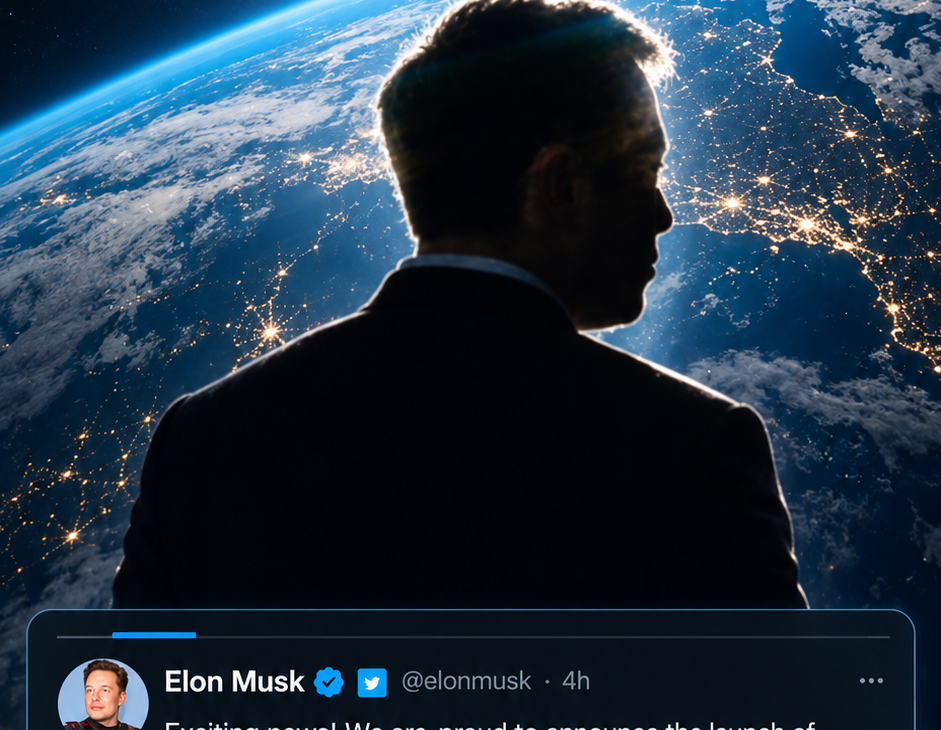
From a potential multitrillion-dollar merger to autonomous vehicles and humanoid robots, Elon Musk is pursuing one of the most ambitious strategies in modern technology. But the latest developments also reveal significant financial and regulatory challenges.
United States — October 28, 2026
Elon Musk is once again at the center of global technology headlines.
The entrepreneur behind Tesla, SpaceX and several other technology ventures is exploring a future in which electric vehicles, artificial intelligence, robotics and space infrastructure become increasingly interconnected.
Recent developments have intensified speculation about what could come next.
Tesla and SpaceX have established special committees to examine a possible merger. Tesla is expanding its autonomous taxi services, while its Optimus humanoid robot program is moving toward early production.
Meanwhile, SpaceX is exploring opportunities that could transform satellite communications and the infrastructure supporting artificial intelligence.
The biggest question is whether Elon Musk is preparing to connect his major businesses into an unprecedented technology ecosystem.
The announcement that caught Wall Street’s attention
On October 20, 2026, Elon Musk acknowledged that Tesla and SpaceX were examining a potential merger.
He described combining the two businesses as an attractive idea, while explaining that special committees had been established to evaluate the possibility.
The announcement immediately attracted attention because of the enormous scale of both companies.
Tesla is internationally recognized for electric vehicles, battery technology and autonomous-driving development.
SpaceX operates launch services, satellite communications and increasingly ambitious computing initiatives.
A merger could potentially connect manufacturing, artificial intelligence, energy infrastructure and space technology.
However, no definitive agreement has been announced.
Any transaction would require extensive financial, corporate-governance and regulatory consideration.
For investors, the possibility is fascinating, but it remains a proposal rather than a completed deal.
Why combining Tesla and SpaceX could be significant
The potential relationship between Tesla and SpaceX extends beyond their shared leadership.
Both companies rely heavily on advanced engineering, artificial intelligence and complex manufacturing systems.
Tesla develops autonomous-driving technology and industrial robotics.
SpaceX builds rockets, satellites and advanced communications infrastructure.
Both businesses also need enormous computing resources.
Combining selected capabilities could theoretically create efficiencies in research, manufacturing and technology development.
However, those potential advantages would need to be weighed against substantial risks.
The companies have different business models, capital requirements and shareholder interests.
A combination could create difficult questions about valuation, management and the allocation of resources.
These considerations make the process considerably more complex than simply placing two companies under one corporate structure.
Tesla’s latest financial results reveal a complicated picture
On October 21, Tesla reported its third-quarter financial results.
Revenue was approximately $28 billion, remaining broadly unchanged from the previous year.
However, net income declined significantly.
The company reported net profit of approximately $787 million, reflecting continued pressure on profitability.
Tesla also announced positive free cash flow of approximately $1.5 billion.
These results demonstrated both the opportunities and challenges facing the company.
Traditional electric-vehicle manufacturing remains an important business, but Musk increasingly emphasizes artificial intelligence, autonomous transportation and robotics.
Investors are closely watching whether these new activities can eventually generate substantial revenue.
For now, they require extensive development and investment.
Cybercab could become Tesla’s next major product
One of the most closely watched projects is Cybercab, Tesla’s purpose-built autonomous vehicle.
Unlike traditional cars, the two-seat vehicle is designed without conventional steering wheels or pedals.
Tesla aims to use it in autonomous ride-hailing services.
During October, company executives indicated that they hoped to begin customer deliveries before the end of 2026.
The company has already introduced paid Cybercab rides in Austin, Texas.
However, the technology faces regulatory scrutiny.
US safety authorities opened an investigation concerning the certification of vehicles without conventional driving controls.
As a result, commercial expansion remains dependent on regulatory decisions and continued technical progress.
The company must demonstrate that its vehicles can operate safely under applicable rules.
Robotaxi expansion reaches more American cities
The autonomous-transportation story continued on October 27.
Reports indicated that Tesla had expanded the operating area of its Robotaxi service in Houston.
The enlarged service zone includes additional parts of the city, reflecting the company’s efforts to broaden access to autonomous transportation.
Houston is an increasingly competitive market for self-driving vehicles.
Other companies, including Waymo, are also developing autonomous transportation services.
Competition is likely to focus on reliability, operating costs, safety and customer convenience.
Tesla’s expansion represents progress, but widespread commercial adoption will require consistent performance across different cities and driving conditions.
Optimus robots are becoming a central part of Musk’s plans
Tesla’s ambitions extend beyond transportation.
The company is developing Optimus, a humanoid robot intended to perform physical tasks.
Musk has repeatedly described robotics as an important part of Tesla’s long-term future.
During the October earnings discussions, he indicated that Tesla hopes to begin selling Optimus robots to outside businesses by the end of 2027.
Early production has started, but the program remains under development.
Humanoid robots present difficult engineering challenges.
They must interpret their surroundings, manipulate objects and move safely through unpredictable environments.
They also need reliable power systems, advanced software and cost-effective manufacturing.
If these challenges are addressed, robots could eventually assist in factories, warehouses and other workplaces.
However, the commercial timetable remains uncertain.
SpaceX is entering a new phase of satellite communications
SpaceX is also expanding its activities beyond rocket launches.
In October, the company announced a spectrum acquisition intended to support additional Starlink mobile services.
The technology could eventually allow smartphones and other devices to communicate through satellite infrastructure in more situations.
Satellite connectivity may be particularly useful in remote areas where traditional cellular networks are limited.
However, developing a broad mobile service requires investment, technical testing and regulatory approval.
Competition with established wireless operators will also be significant.
The expansion illustrates SpaceX’s ambition to become a larger participant in global communications.
Could artificial intelligence move into space?
One of Musk’s more unusual ambitions involves the possibility of operating substantial AI computing infrastructure in space.
Artificial intelligence requires powerful processors and enormous quantities of electricity.
Large data centers also require extensive cooling and networking equipment.
Musk has discussed whether orbital infrastructure might eventually support some of these needs.
The concept is technologically ambitious.
Space-based computing would introduce significant challenges involving radiation, maintenance, communications delays, launch costs and heat management.
These obstacles mean that orbital AI infrastructure is not a simple replacement for conventional terrestrial data centers.
Nevertheless, the idea demonstrates how Musk is exploring connections between space technology and the AI industry.
A new strategy for the semiconductor industry
Computer chips are essential to Tesla’s autonomous systems and SpaceX’s future computing plans.
In August 2026, Tesla and SpaceX announced plans involving a semiconductor manufacturing project in Texas.
The initial investment was estimated at approximately $16.8 billion.
The project reflects a broader effort to strengthen access to computing technology.
Advanced semiconductors are increasingly important for autonomous vehicles, robotics and artificial intelligence.
However, building manufacturing capacity is expensive and technically demanding.
Successful operations depend on specialized equipment, supply chains, experienced engineers and high production yields.
The project therefore represents both a major opportunity and a substantial execution challenge.
Why investors are paying close attention
Musk’s companies occupy important positions in several industries that attract significant investor interest.
Artificial intelligence is driving demand for computing hardware and software.
Autonomous transportation could eventually change how people and goods move.
Robotics may create new applications in manufacturing and services.
Satellite communications could improve connectivity in underserved regions.
Each of these markets offers potential opportunities.
However, ambitious technology projects frequently involve delays, unexpected expenses and competition.
The financial success of a business depends not only on technological possibilities but also on customer demand, profitability and execution.
A promising product announcement does not guarantee commercial success or investment returns.
Musk’s warning about the AI financing boom
Another significant development concerns the financing of artificial intelligence infrastructure.
Musk has recently warned about the difficulties facing some companies that depend heavily on borrowing to build AI data centers.
The rapid expansion of computing infrastructure has created enormous demand for financing.
Some operators rely on large debt arrangements to purchase expensive processors and construct facilities.
But financing conditions can change.
Investors and lenders may become more selective, particularly when businesses lack diversified revenue sources.
Musk’s comments highlight an increasingly important issue within the AI industry: whether infrastructure investments will generate sufficient long-term economic returns.
What does all this mean for ordinary people?
The developments surrounding Musk’s companies may eventually influence everyday life.
Autonomous transportation could change mobility services.
Satellite communications may expand internet access in remote locations.
Humanoid robots could assist with repetitive or physically demanding activities.
More powerful AI systems may improve business productivity and scientific research.
However, each technology also raises important questions.
Consumers need reliable services and transparent information.
Workers may need new skills.
Regulators must consider public safety, competition and data protection.
The consequences of technological change will depend on how companies deploy their products and how society adapts.
What happens next for Elon Musk?
Several major developments will be closely watched before the end of 2026.
Tesla and SpaceX must determine whether their merger discussions will progress toward a formal transaction.
Tesla is working toward expanded Cybercab deployment.
The Optimus program faces important development and manufacturing milestones.
SpaceX continues expanding satellite communications and investing in advanced infrastructure.
Investors will also examine whether Tesla can improve profitability while supporting expensive long-term projects.
The next few months could therefore provide important evidence about the feasibility of Musk’s plans.
Conclusion: Elon Musk is betting on a connected technological future
The latest developments surrounding Elon Musk reveal a strategy that reaches far beyond electric vehicles and rockets.
Tesla is pursuing autonomous transportation and robotics.
SpaceX is expanding satellite connectivity and exploring new computing infrastructure.
Both companies are investing in technologies that could influence the development of artificial intelligence.
The potential merger between Tesla and SpaceX has added another dimension to these ambitions.
Yet major questions remain about financial performance, corporate governance, regulation and technical feasibility.
Elon Musk’s next major breakthrough may not be a single product. It could be the creation of an interconnected technology ecosystem combining artificial intelligence, robotics, transportation and space infrastructure.
Whether that vision becomes a commercial reality will depend on decisions made over the coming years.
For now, the world is watching what happens next.