
David McWilliams: Ireland’s Most Influential Economic Voice
David McWilliams is one of Ireland’s most recognizable economists and public commentators, known for his ability to explain complex...

Why Ancient Philosophical Ideas Remain Relevant Today
The human search for meaning has never been confined to one era. While technology continues to accelerate at astonishing speeds and society...

How Ordinary Hobbies Help Develop New Skills
In today’s fast-paced world, hobbies are often thought of as side activities—pleasant pastimes that give us a break from daily routines. Yet, beneath their leisurely surface lies a remarkable potential: ordinary hobbies often work as powerful engines for skill development, subtly shaping our abilities in ways we don’t immediately recognize. Consider gardening, for instance. At first glance it appears to be nothing more than planting seeds and tending to soil, but in practice it teaches patience, observation, and problem-solving. A struggling plant requires analysis, adjustment, and persistence—skills that easily transfer into professional and personal spheres. The same is true for activities such as cooking, painting, or even playing a casual game of chess. Cooking sharpens time management and multitasking, while painting encourages creativity, attention to detail, and the ability to think visually. Meanwhile, strategy-based games train the mind to plan ahead and react to changing circumstances. What makes hobbies so effective as learning tools is that they provide a low-pressure environment. Unlike formal training, hobbies invite experimentation without the fear of failure. A burned cake or a crooked sketch simply becomes practice rather than a setback. This psychological freedom often accelerates growth, as people feel motivated to try again and improve. Over time, these repeated efforts accumulate into real expertise or transferable skills. By embracing hobbies not just as entertainment but as opportunities for growth, individuals can unlock new strengths while enjoying the process, making learning both natural and deeply rewarding.

Unexpected Connections Between Music and Our Memory
When we think of memory, we often picture photographs, journals, or even the distinct smell of a childhood home. Yet music has a curious way of weaving into the very fabric of our recollections, sometimes bringing back moments we thought were long forgotten. A single melody can transport us to a summer evening years ago, the lyrics of a song can revive conversations with old friends, and the rhythm of a beat can unexpectedly recall emotions we haven’t felt in decades. What makes this connection so astonishing is not simply that music triggers memory, but how intricately it seems to organize and preserve those experiences in our minds. Scientists suggest that this is because music involves multiple areas of the brain at once: regions responsible for emotion, movement, and language all come alive in response to a song. That means the memories associated with music aren’t stored in one neat location but are tied into an entire network of impressions. This may explain why even individuals living with memory conditions, such as dementia, can still respond strongly to familiar tunes long after other aspects of recognition fade. Beyond its therapeutic potential, the bond between music and memory also shows up in unexpected daily moments. A random song played in a café might serve as an instant time machine, unlocking a past self with almost uncanny precision. Such experiences remind us that memory is not static or linear, but dynamic and layered, continually reshaped by the sensory world. Among those senses, music stands as one of the most powerful guides leading us back to who we are.

Why It’s Sometimes Useful to Change the Usual Perspective on the World
Most of us move through the world guided by familiar habits of thought: we see situations in a certain way, rely on assumptions that feel safe, and interpret events through the lens of our personal experience. This perspective is not wrong—after all, it helps us navigate daily life efficiently—but it is inherently limited. Sometimes, deliberately shifting how we view the world can open unexpected doors. When we change our perspective, even briefly, we invite new insight into our routines, our relationships, and our sense of purpose. A problem that once felt immovable can suddenly appear solvable; a conflict we saw as black and white may reveal shades of nuance we never considered. The act of seeing differently does not demand that we reject our usual understanding of things, but rather that we stretch it, allowing more possibilities to enter. This can be as simple as listening to someone whose background is vastly different from our own, or as challenging as questioning beliefs we have long held without reflection. The reward of such openness is not only personal growth but also greater empathy, because recognizing alternative viewpoints naturally fosters connection. In a world that often encourages speed, certainty, and uniformity, the ability to pause and actively reconsider is a quiet form of resistance. It reminds us that perspective is not fixed but fluid, and that by stepping outside of our mental frame, we often rediscover the richness of the world in front of us. Character count: 1528

How Nature Recovers When Humans Take a Step Back
When people talk about protecting the planet, the focus is often placed on big policy shifts, technological innovation, or dramatic lifestyle changes. Yet sometimes the most powerful catalyst for healing comes not from what we do, but from what we stop doing. When human activity slows down or withdraws from a landscape, nature has an extraordinary ability to reclaim space, adapt, and restore balance. We see this in abandoned industrial sites where cracks in concrete quickly become pathways for weeds, soon followed by insects, birds, and mammals that slowly knit together a revived ecosystem. Coastal areas around the world demonstrate a similar resilience: when fishing pressure eases or development is halted, fish populations rebound, shorelines grow healthier, and mangroves return to stabilize the soil. Even urban environments, thought to be irreversibly altered, show encouraging signs when green spaces are allowed to flourish without overmanagement. During recent global slowdowns, air cleared in congested cities, waters ran visibly cleaner in rivers, and wildlife appeared in places where it had been absent for decades. These changes remind us that while human influence is far-reaching, the living world carries an astonishing capacity to recover if given the chance. The lesson is not only about environmental preservation but also about restraint—understanding that stepping aside is sometimes the most restorative action we can take. The resurgence of plants, animals, and ecosystems after periods of human pause demonstrates that our planet is not a defeated system, but a resilient one waiting for space to breathe. Character count: 1519

What the Concept of “Success” Really Means in Different Cultures
When people talk about “success,” they often assume the word has a universal meaning—usually tied to career advancement, financial stability, or social recognition. But in truth, the concept is profoundly shaped by cultural values, social structures, and even historical traditions. In many Western contexts, success is often measured by individual achievement. A person who climbs the corporate ladder, builds a profitable company, or earns a prestigious title is widely seen as successful. The focus tends to be on personal ambition, self-reliance, and the visible markers of progress, like wealth or professional prestige. Yet in other parts of the world, the story looks very different. In several East Asian cultures, for example, success is intertwined with family reputation, communal harmony, and fulfilling one’s role within a collective framework. A thriving career may be important, but it often holds value in how it contributes to parents’ pride, social stability, or long-term generational benefits rather than just the individual’s sense of accomplishment. In many Indigenous communities, success is not defined by material gain at all, but by balance—living in accordance with nature, preserving knowledge, and nurturing relationships that sustain the group. Even in Europe, diverse attitudes exist: in some countries, striking a balance between work and leisure is lauded, making a fulfilling personal life equally central to the idea of “making it.” Seen this way, success is not a fixed standard but a mirror reflecting what each society treasures most deeply. Characters: 1,540

Hidden Stories Behind the Things We Use Every Day
When we glance at the objects scattered around our homes, most of us rarely wonder about their origins. A mug is just a mug, a fork merely a utensil, a lightbulb no more than a tool to fight darkness. Yet each of these items holds a story that stretches far beyond its present function. The humble coffee cup, for instance, is the product of centuries of experimentation with ceramics, influenced by trade routes that once connected distant continents. The fork, now taken for granted at every dining table, was once a controversial newcomer in European aristocracy, criticized for being unnecessary and even decadent. And the lightbulb, though popularly credited to a single inventor, actually represents the culmination of dozens of failed prototypes and overlapping patents—a reminder that innovation is rarely a solitary act, but rather a patient layering of small, persistent attempts. These hidden stories reveal more than interesting trivia; they show how human culture, necessity, and imagination intertwine. The everyday object is never just an object—it is a window into history, invention, and even resistance to change. By tracing the quiet evolution of the tools we use, we not only gain perspective on how the past has shaped our routines but also develop a deeper appreciation for the ingenuity embedded in our surroundings. When we start to view the ordinary in this way, the world becomes far richer, and the objects we once overlooked begin to speak with new and unexpected voices. Character Count: 1532

The Art of Slowing Down: Learning to Live Without Rush
In a world that often equates busyness with success, many of us have forgotten what it feels like to live at a gentler pace. We rush from one obligation to another, multitasking our way through the day in hopes of becoming more efficient, more accomplished, or more worthy. Yet the irony is that the faster we move, the less we truly notice. Conversations become half-heard, meals turn into hurried fuel stops, and even our moments of supposed rest are crowded with notifications and endless scrolling. Slowing down is not about doing less for the sake of laziness; it is about reclaiming presence, giving our attention the space it needs to notice life’s details, and allowing ourselves to be fully where we are. Imagine walking without headphones, letting your thoughts wander freely instead of filling silence with constant input. Picture a meal shared without glancing at screens, where flavors can actually be savored and words exchanged with care. Such small acts are not indulgences; they are practices that restore balance. Choosing slowness is often countercultural, and it may feel uncomfortable at first, almost like resisting a current. But it is within this resistance that we rediscover patience, creativity, and connection. By no longer measuring life through speed or sheer output, we begin to experience a steadier rhythm where moments gain meaning. The art of slowing down is, at its core, a commitment to turning life from a series of blurred sprints into a walk that allows us to breathe. Character count: 1549
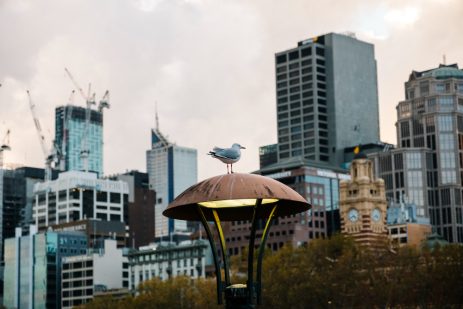
Why the Cities of the Future Will Differ from Today’s Megacities
For decades, the image of the modern metropolis has been defined by towering skyscrapers, sprawling highways, and dense clusters of people. These megacities became symbols of progress, opportunity, and global connectivity. Yet as societies rethink how we live, work, and interact with our environments, the cities of the future are poised to break away from this model. They are unlikely to simply become bigger versions of today’s urban giants. Instead, they will be shaped by a mixture of technological innovation, shifting cultural values, and urgent responses to environmental challenges. Unlike current megacities, which often struggle with pollution, traffic congestion, and strained infrastructure, future urban centers may be designed around principles of resilience and adaptability. The integration of renewable energy, advanced public transportation, and green architecture will not just be optional features but cornerstones of city life. Equally significant will be the emphasis on human wellbeing: rather than forcing residents to adapt to the city’s pace, cities will increasingly be structured to enhance health, foster community, and support sustainable lifestyles. Remote work, automation, and artificial intelligence will transform economic activity, reducing the need for massive office districts and opening new possibilities for more balanced city layouts. In a world facing climate risks and population shifts, the next generation of cities is unlikely to replicate the overwhelming scale of today’s megacities; instead, they are being imagined as smarter, cleaner, and more humane places to live. Character count: 1555