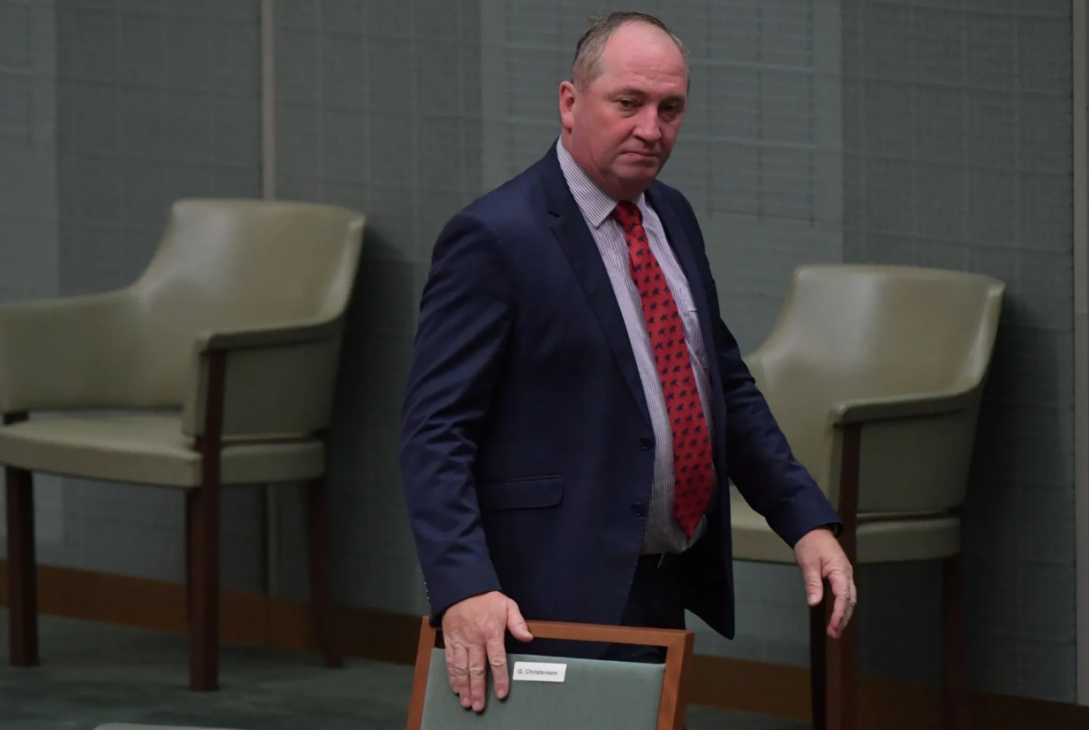
Barnaby Joyce has been one of the most colorful, recognizable, and controversial figures in modern Australian politics. Over a long parliamentary career, he has served in both the Senate and House of Representatives, led the National Party, held senior cabinet portfolios, and twice served as deputy prime minister. His political identity has been strongly associated with regional and rural Australia, agriculture, infrastructure, resource industries, and the interests of communities outside Australia’s largest metropolitan centers.
Joyce’s appeal has often come from a political style very different from the carefully managed communication associated with many senior politicians. He speaks in a direct and sometimes unpredictable manner, frequently uses colorful language, and presents himself as someone willing to challenge political orthodoxy. That approach has built a loyal following but has also contributed to numerous controversies that have periodically overshadowed his policy work.
Early Life, Education, and Career Before Politics
Barnaby Thomas Gerard Joyce was born in Tamworth, New South Wales, in 1967 and grew up in a rural environment. His background gave him familiarity with the agricultural and regional communities that would later form the political foundation of his career.
He studied financial administration at the University of New England in Armidale and eventually worked as an accountant. This professional background gave him experience with financial and business issues before he entered Parliament.
Joyce’s regional roots became central to his political identity. Rather than attempting to reinvent himself as a metropolitan political figure after entering federal politics, he consistently emphasized rural communities, farmers, regional businesses, and the economic importance of agriculture and resources.
Entering Federal Politics Through the Senate
Joyce entered federal Parliament as a Queensland senator for the National Party after winning election in 2004 and beginning his Senate term in 2005.
He quickly developed a reputation for independence. Although the Nationals traditionally govern in coalition with the Liberal Party, Joyce was willing to criticize or oppose Coalition positions when he believed they conflicted with the interests of his constituents.
This willingness to break from conventional discipline helped establish his political brand. It also occasionally created difficulties for Coalition leadership because governments depend on reliable parliamentary support.
His Senate years demonstrated an important characteristic that would follow him throughout his career: Joyce was rarely content to remain an anonymous party representative.
Moving to the House of Representatives
In 2013, Joyce moved from the Senate to the House of Representatives by contesting the New South Wales electorate of New England. He won the seat and strengthened his position within the parliamentary National Party.
The move was strategically important because Australian prime ministers and deputy prime ministers ordinarily sit in the House of Representatives. It therefore opened a clearer path toward the senior leadership positions Joyce would later occupy.
Regional development, agriculture, water, infrastructure, and resources remained major themes in his political work. Joyce argued that national prosperity depended heavily on industries and communities located far beyond Sydney, Melbourne, and other major urban centers.
Becoming National Party Leader and Deputy Prime Minister
Joyce became leader of the National Party in 2016 following the retirement of Warren Truss. Because the Nationals were the junior partner in the governing Coalition, Joyce also became deputy prime minister under Malcolm Turnbull.
Reaching the deputy prime ministership represented the peak of his formal political power. He became one of Australia’s most senior government figures while continuing to cultivate an image rooted in regional politics.
His responsibilities included major portfolios connected with agriculture and resources, areas particularly important to National Party constituencies.
Joyce’s relationship with Liberal Party leaders also demonstrated the complexities of Coalition government. The Nationals need to cooperate with the Liberals to govern, but they must simultaneously demonstrate to regional voters that they maintain an independent political identity.
The Citizenship Crisis
One of the most dramatic moments in Joyce’s career came during Australia’s parliamentary citizenship crisis.
Section 44 of the Australian Constitution restricts people with certain foreign citizenship connections from serving in Parliament. It emerged that Joyce was considered a New Zealand citizen by descent, despite having been born and raised in Australia.
In 2017, the High Court ruled him ineligible to have been elected, temporarily removing him from Parliament and creating significant political consequences for the government’s numbers in the House of Representatives.
Joyce renounced his New Zealand citizenship and contested the subsequent New England by-election. He won decisively and returned to Parliament.
The episode became part of a much larger constitutional crisis that affected politicians from several parties and generated renewed debate about Australia’s eligibility rules for parliamentary candidates.
Personal Controversy and Resignation From Leadership
Joyce’s political career faced another major crisis when his relationship with former staff member Vikki Campion became public while his marriage was ending.
The story generated intense national media coverage and raised broader questions involving workplace relationships, privacy, ministerial standards, and the boundary between the personal lives of politicians and legitimate public scrutiny.
In 2018, Joyce resigned as National Party leader and deputy prime minister.
The episode demonstrated how quickly personal controversy can alter a political career. Joyce went from occupying Australia’s second-highest elected government position to the backbench, although he remained in Parliament and retained significant support within parts of the National Party.
An Extraordinary Political Comeback
For many politicians, resignation under such circumstances might have represented the effective end of a leadership career. Joyce, however, eventually returned.
In 2021, the National Party room replaced Michael McCormack with Joyce as leader. As a result, Joyce once again became deputy prime minister, this time serving alongside Prime Minister Scott Morrison.
The comeback highlighted his continued influence among National Party colleagues. Despite years of controversy, he remained capable of assembling sufficient internal support to reclaim the leadership.
He served as deputy prime minister until the Coalition lost the 2022 federal election to Labor. Following the election defeat, David Littleproud replaced him as leader of the Nationals.
Advocacy for Regional and Rural Australia
Throughout the dramatic changes in his career, Joyce has maintained a strong focus on regional Australia. He has consistently argued that national policy debates can become too heavily dominated by metropolitan perspectives.
Agriculture has naturally been central to this approach, but his advocacy has extended to roads, dams, water management, telecommunications, mining, energy, regional employment, and decentralization.
Joyce has often argued that industries such as agriculture and mining generate enormous national wealth while the communities producing that wealth do not always receive an appropriate share of infrastructure investment or government attention.
This message resonates with a longstanding divide in Australian politics between metropolitan and regional priorities.
Climate and Energy Debates
Climate and energy policy has been one of the areas where Joyce has frequently differed from progressive political opinion and, at times, from more moderate elements of the Coalition.
Regional economies can be particularly exposed to changes in energy and environmental policy because mining, agriculture, electricity generation, and heavy industry are often concentrated outside metropolitan areas.
Joyce has emphasized the economic consequences of rapid policy changes and argued for protecting jobs, energy reliability, agricultural production, and regional industries.
Critics argue that this approach can slow Australia’s transition toward lower emissions. Supporters contend that climate policies must account for economic reality and should not disproportionately burden rural communities.
These disagreements reflect a broader challenge for the National Party as it attempts to represent traditional resource-producing constituencies while Australia undergoes a major energy transition.
Communication Style and Public Persona
Joyce’s political communication is unusually recognizable. His speeches and interviews often contain colorful metaphors, abrupt arguments, humor, and language that sounds less scripted than the statements typically produced by political communications teams.
This unpredictability has advantages and disadvantages. It can make him appear more authentic to voters who dislike polished political messaging, but it can also create headlines that distract from the policy argument he intended to make.
His personality has therefore become an important component of his political durability. Even when he has not occupied a leadership position, he has remained capable of attracting substantial media attention.
Controversies and Resilience
Joyce’s career has included political, constitutional, and personal controversies that would have permanently ended the careers of many politicians. Yet he has repeatedly demonstrated an ability to remain electorally relevant.
Part of that resilience comes from the strength of his support in New England and his connection with regional political issues. Another factor is the National Party’s distinct internal culture, where advocacy for local and regional interests can carry considerable weight.
His career demonstrates that Australian political success is not determined exclusively by national popularity. A politician can remain influential by maintaining strong support within a particular electorate, party organization, or constituency.
Barnaby Joyce’s Political Legacy
Barnaby Joyce’s ultimate legacy will involve more than the controversies that generated national headlines. His career reflects the continuing political importance of regional Australia and the unusual structure of the Liberal-National Coalition.
He has been a senator, member of the House of Representatives, cabinet minister, twice leader of the National Party, and twice deputy prime minister. Few contemporary Australian politicians have experienced such dramatic rises, falls, and returns to senior leadership.
Supporters view him as an authentic and persistent advocate for farmers, regional communities, and industries they believe are often misunderstood by metropolitan policymakers. Critics see a politician whose controversies and provocative communication have sometimes overshadowed substantive policy discussions. Both interpretations explain why Joyce has remained such a prominent figure.
His career ultimately demonstrates the importance of political resilience. Despite electoral challenges, constitutional disqualification, leadership defeat, personal scandal, and periods on the backbench, Barnaby Joyce repeatedly returned to the center of Australian political debate. Whether admired or criticized, he has secured a distinctive place in the country’s modern political history.